




Case Study - Disaster Restoration Scotland
Monday 14 September 2026The firm you call on the worst morning of the year
Nobody plans for a burst pipe on a Sunday night, or a kitchen fire, or the slow leak that has been soaking a bedroom wall for a fortnight before anyone notices the stain. When it happens, the first phone call matters more than most people realise, because the difference between a room that dries out and a room that has to come apart is usually measured in hours.
Disaster Restoration Scotland, based at Regent Place in Airdrie, is the firm on the other end of that call. Owner Sidney Friend has worked in fire and flood restoration since 1994, starting out in a national restoration franchise and setting up on his own account as Disaster Restoration Scotland in 2014. In 2007 his franchise took the top award for excellence and professional management, working across Monklands, East Kilbride and Clydesdale, and out into the Borders and Edinburgh.
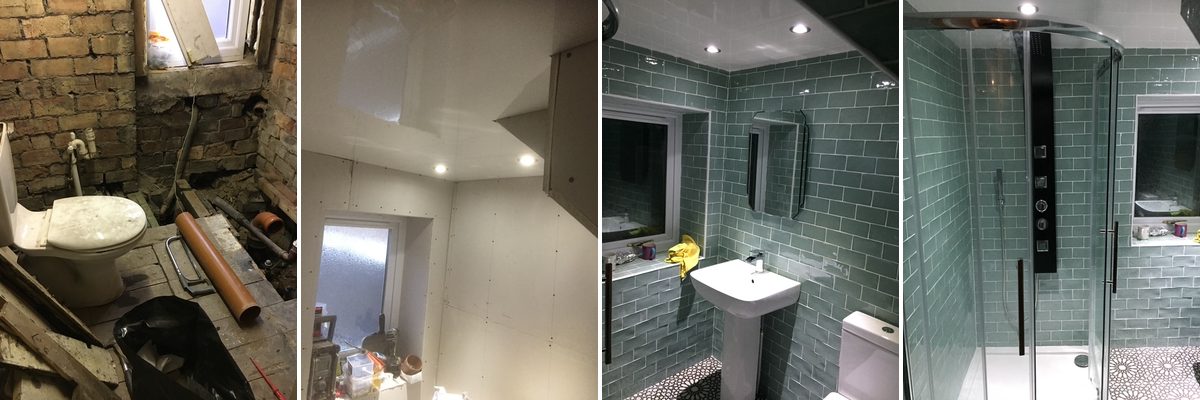
What the business does not do is arrive, dry the place out and leave the householder to find a joiner. It takes the job from the first make safe through to the last coat of paint: leak detection, track and trace, strip out, drying, then plumbing and heating, ceilings, plastering, tiling, bathrooms, kitchens and decorating, all the way back to a finished room.
Disaster Restoration Scotland at a glance
- Based at Regent Place in Airdrie, North Lanarkshire
- Fire and flood damage, leak detection, track and trace and accidental damage, from the first make safe through to full reinstatement
- Trading as Disaster Restoration Scotland since 2014, with more than thirty years in restoration behind the business
- Also plumbing and heating, bathroom installation and refurbishment, kitchen fitting, tiling, ceiling replacement and repair, plastering, painting and decorating and general property maintenance
- Rated 5.0 out of 5 from 24 verified customer reviews on the SCOTSS Approved Trader portal
- A SCOTSS Approved Trader since 2022
- The business and its owners have been vetted by Trading Standards
Advice on the phone counts as part of the job
Ask Sidney what the work actually involves and the answer starts before anyone has been booked in. A good part of it, he says, is a phone call from somebody who does not yet know whether they have a problem, wants to know what to do about the water coming through the ceiling, and is not sure whether they are supposed to ring their insurer first. Those calls get answered properly whether or not they turn into a job.The rest is the unglamorous, careful end of the trade: finding where the water is actually coming from rather than where it is showing, lifting only what has to be lifted, and putting a house back so that in six months nobody can tell anything happened. It is work done in somebody's home, usually at a point when they are already having a bad week.
“It gives us great satisfaction when we can help turn a devastating situation into a positive and reassuring situation.”
Why a restoration firm went looking to be checked
Emergency work is one of the trades where doorstep callers and cold callers do best, because the customer is under pressure and has no time to shop around. Sidney's reason for applying to the scheme was simple enough: he wanted to be somewhere that checks the trades on it, and to be seen to have been checked. He describes the attraction as the upfront, honest and trustworthy vetting of trades.He found the application itself straightforward, if not quick. “The vetting process was straightforward and a pleasure to submit,” he says, and there was a wait while the checks were run, which is how it is meant to work. When the acceptance came through, by his own account he was overwhelmed.
What he wanted out of it was not volume for its own sake. “We are targeting people who are looking for honest and trustworthy trade people,” he says, “whether it is just a phone call or an inspection.” The point of being on a checked list is that the people who find you there have gone looking for exactly that.
The card in the customer's hand

The card Sidney leaves with customers, with a QR code straight through to his profile.
“We ask our customers, when we have finished, if they would be so kind as to leave a review, so other customers can be reassured with our work and ethics.” That is the whole method, and 24 reviews at a straight 5.0 out of 5 suggests it works. The reviews are left by customers on the profile rather than gathered and published by the business itself, which is what makes them worth reading.
A category that did not exist yet
One small thing is worth recording, because it says something about how the scheme is run. Fire and flood restoration does not fit tidily into the usual list of trades, and when Sidney got in touch to ask which category his work belonged under, the answer was not to squeeze him into the nearest one. A new heading was created for it. He describes the team as so helpful that they made a new heading for his particular skill.Vetted before the work starts, judged by customers afterwards
The portal is run on behalf of SCOTSS, the Society of Chief Officers of Trading Standards in Scotland, and it is supported by Police Scotland. Before a business is accepted, Trading Standards check the business and the people who own it: complaints history, insurances, Companies House records, the disqualified directors register, advertising and terms of business, and a face to face interview at the trader's own premises.What Trading Standards do not do is inspect anybody's workmanship, and that division is deliberate. Trading Standards check that the business is who it says it is and has behaved properly. The customers, in the reviews, say what the work was like. For a trade that turns up in an emergency, being on a list where both of those things are true is the point.
Sidney puts the value of it plainly enough: being part of a scheme that has been through Trading Standards is what gives the customer the reassurance, and since joining the business has seen a marked increase in enquiries.
Steady, and staying that way
Asked about the future, Sidney does not talk about expansion. “Our ethics are to continue to supply and help customers to a high and honest standard.” For a firm whose customers mostly arrive by accident, on a bad day, with water coming through a ceiling, that is the right ambition. “We have had a very positive response,” he says, “and feel very humble when we can help and reassure after damage has happened.”Sidney Friend
Owner, Disaster Restoration Scotland
Questions we are often asked
What does Disaster Restoration Scotland do?Fire and flood damage restoration, leak detection, track and trace and accidental damage work, taken from the first make safe and strip out through to full reinstatement. That includes plumbing and heating, bathroom installation and refurbishment, kitchen fitting, tiling, ceiling replacement and repair, plastering, painting and decorating and general property maintenance.
What area do they cover?
The business works out of Regent Place in Airdrie, covering North Lanarkshire and the surrounding area. It is worth a phone call for anything further out, as emergency work is often taken on beyond the usual patch.
Has Trading Standards checked the business?
Yes. Disaster Restoration Scotland has been a SCOTSS Approved Trader since 2022, and the business and its owners have been vetted by Trading Standards. Trading Standards do not inspect or approve individual jobs, so the workmanship is judged in the customer reviews on the profile.
- View Disaster Restoration Scotland's SCOTSS Approved Trader profile.
- Read Disaster Restoration Scotland's verified customer reviews.
- If you would like to become an Approved Trader, you can apply here.
- If you are an Approved Trader and would like to leave a case study either as text or as a video, get in touch.